AI isn't new. Being able to trust it is.
Something shifted in the last six months.
If all you do is ask AI questions, like a smarter search box, you might not have noticed much of a leap. The best models from Google, OpenAI and Anthropic were already pretty good at that a year or two ago.
A few changes stacked up, mostly in the last year, and together they turned a clever chatbot into something you can actually hand a job to.
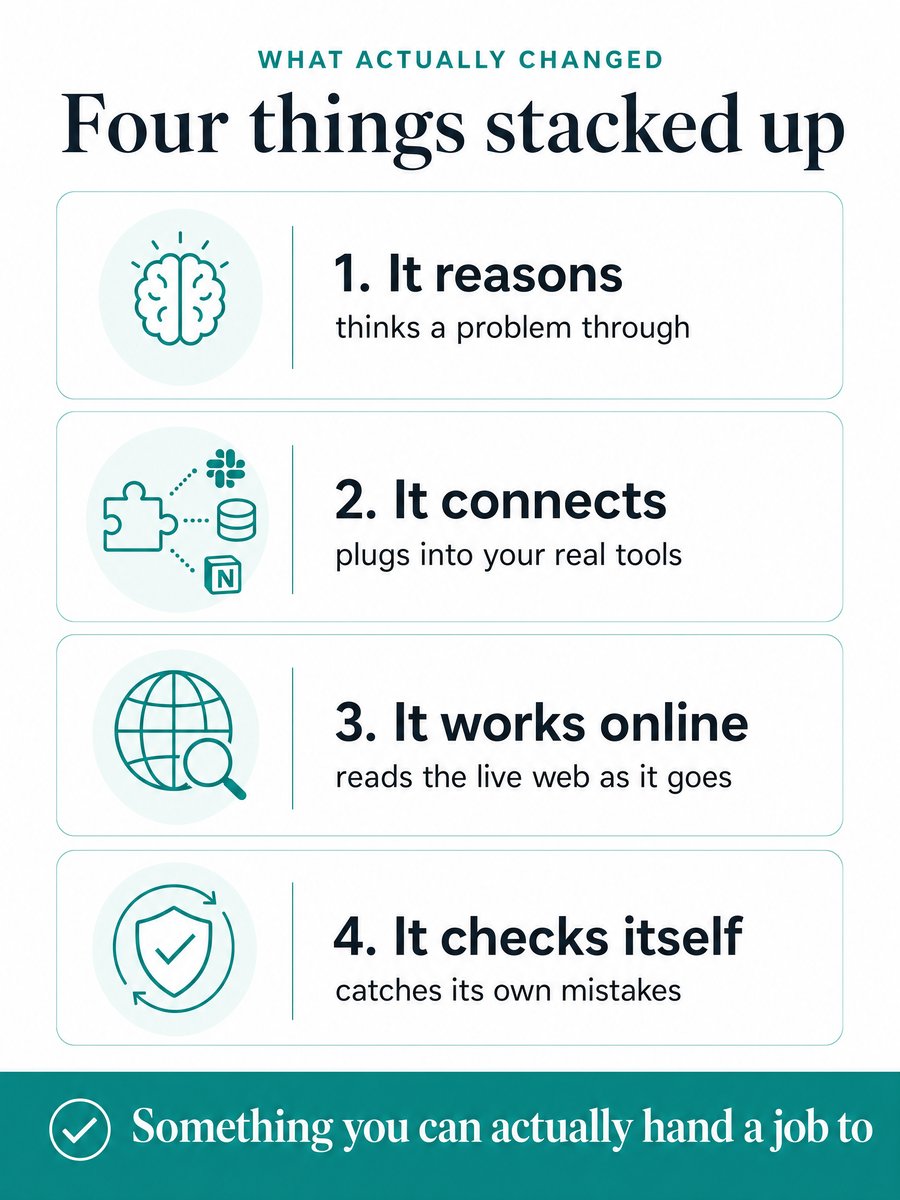
First, it reasons now. The older models would blurt out the first answer that came to mind. The newer ones work through a problem step by step, check themselves, and back up when they get it wrong. That started in late 2024 and became normal across the board through 2025.
Second, it can plug into your real systems. There's now a common standard (you might've heard me bang on about MCP) that lets AI read and act in your other software without someone hand-building every connection. So it's not just talking. It can go and do.
Third, it's online by default and the web is meeting it halfway. It can browse and read documentation as it works, and plenty of websites and help docs are quietly being made easier for AI to find its way around. The pipes between the AI and the rest of your world got a lot wider.
Fourth, it can check its own work. Give it the right tools and it'll run the actual calculation to confirm a number rather than guess at it, and catch its own mistakes before handing the result back.
Stack those four things up and it stops being a party trick. It becomes a reliable-ish partner that gets work done. You can point it at a whole job now, not just one step, and it'll work through the lot on its own and come back when it's finished. That's the bit that feels brand new.
Here's the twist though. Almost none of the technology underneath it is new at all.
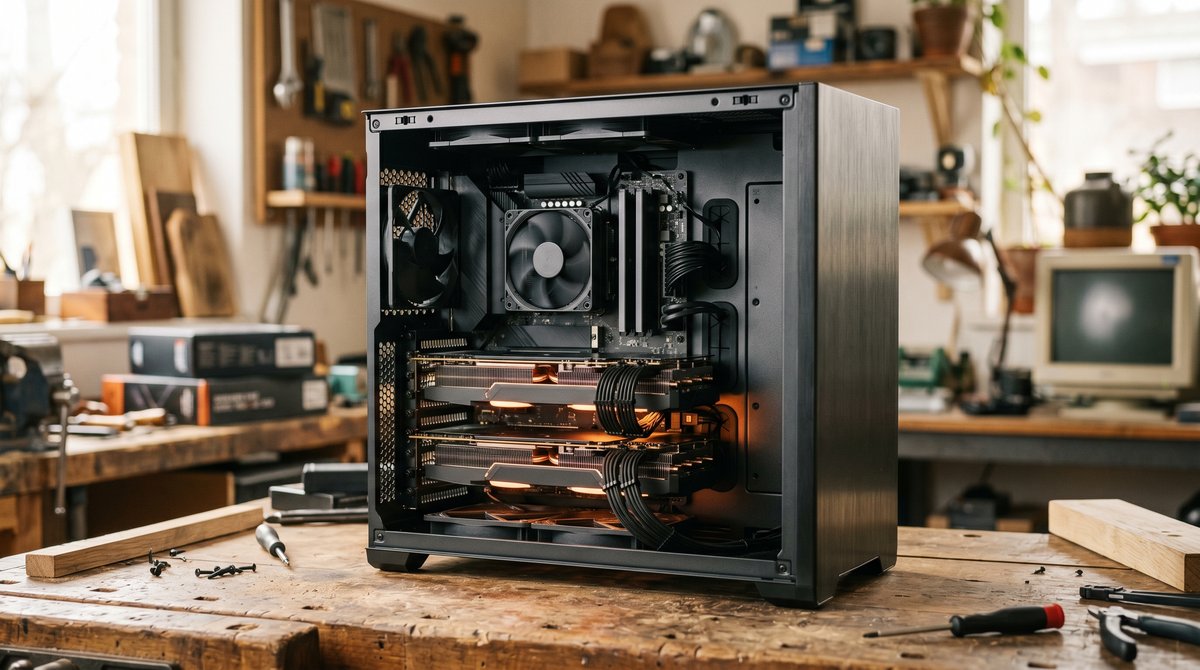
The idea of a machine that learns a bit like a brain goes back to 1943. The term "artificial intelligence" was coined in 1956. The method that trains nearly every AI system today was already well understood by 1986. So depending on which bit you count, the maths has been sitting on a shelf for 40 to 80 years.
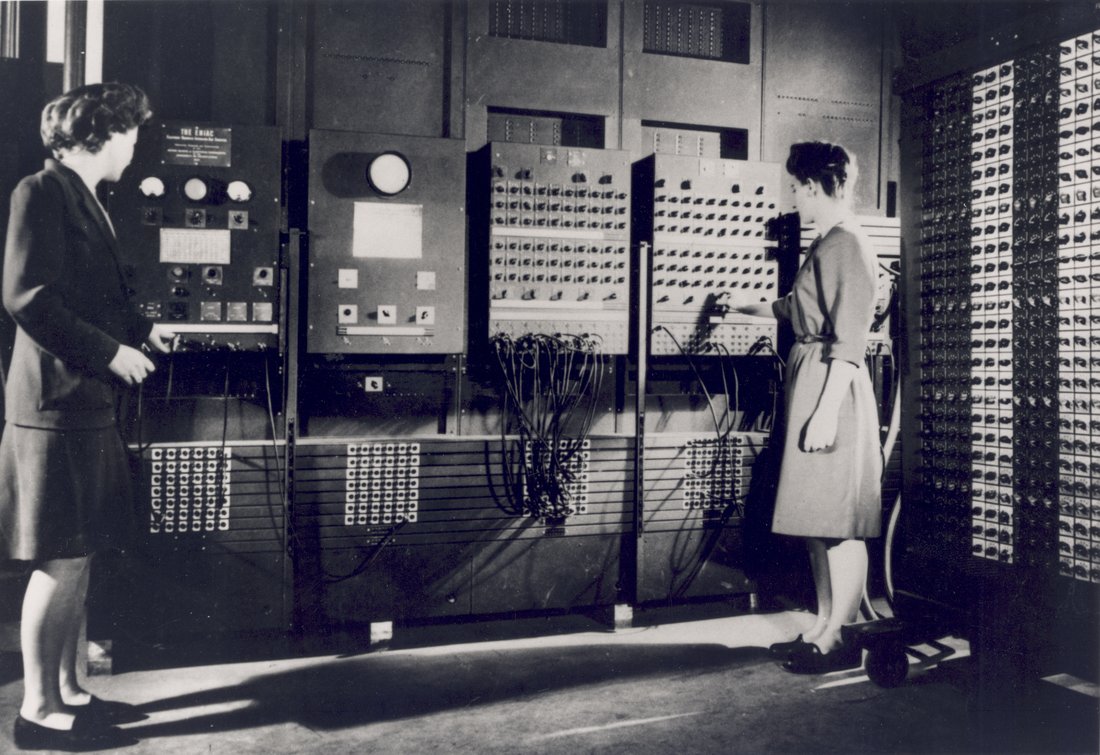
ENIAC, mid-1940s. U.S. Army photo, public domain.
It went nowhere for decades because two things were missing: cheap computing power and enough data. And here's my favourite part. The thing that finally cracked it open was video games. Graphics cards, the chips built so teenagers could play games at higher frame rates, turn out to be brilliant at exactly the kind of maths AI needs. In 2012, three researchers used two off-the-shelf gaming cards to win an image recognition contest by a humiliating margin, and that was the starting gun for everything since.
So when people say AI came out of nowhere, it didn't. The intelligence has roots going back 80 years. What's genuinely new is the reliability, and the plumbing that lets a normal person actually use it.
That's the real shift. For years the barrier was never "is the technology clever enough." It was "can someone without a computer science degree trust it and wire it into their actual work." For the first time, the honest answer is yes.
If you've been sitting it out because it felt like something you'd have to study, I reckon that wait is over. The hard part was never supposed to be your problem.
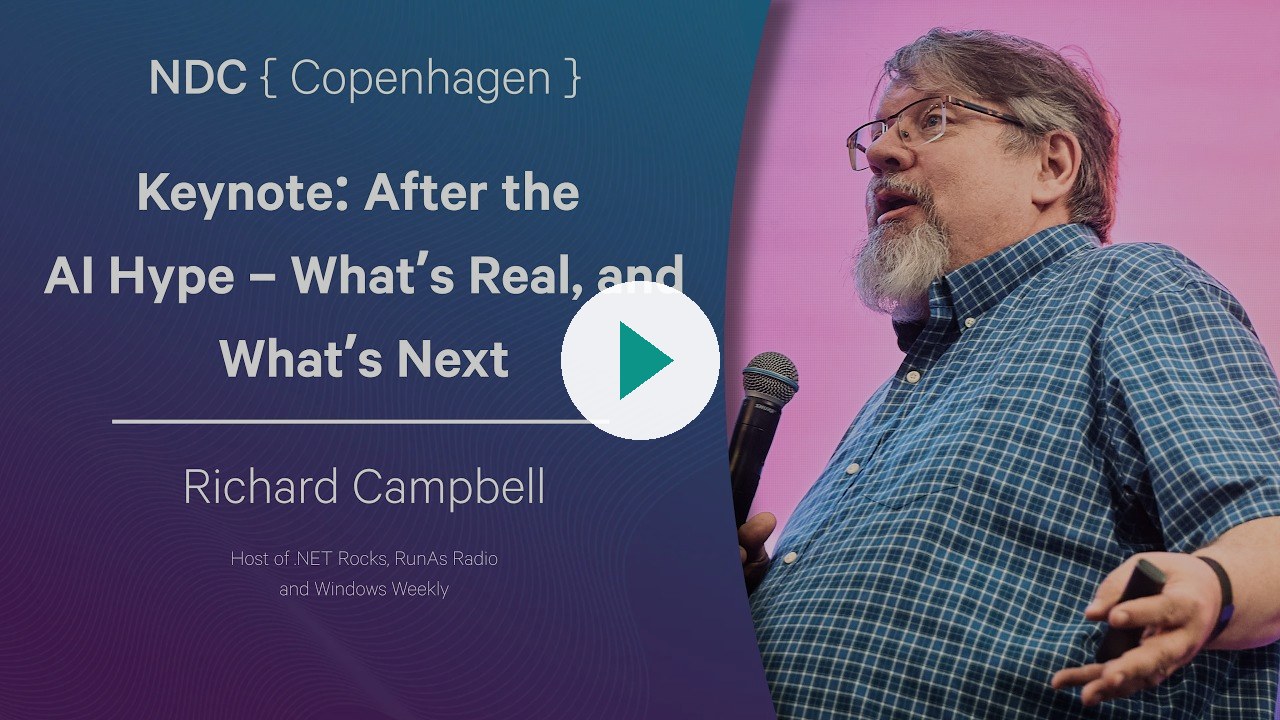
One last thing. This was sparked by a talk I listened to recently, Richard Campbell's keynote "After the AI Hype, What's Real and What's Next" at NDC. If you want the longer, nerdier version of all this, it's well worth a watch.
Cheers,
Jez