Nobody knows who wrote the most published text on Earth
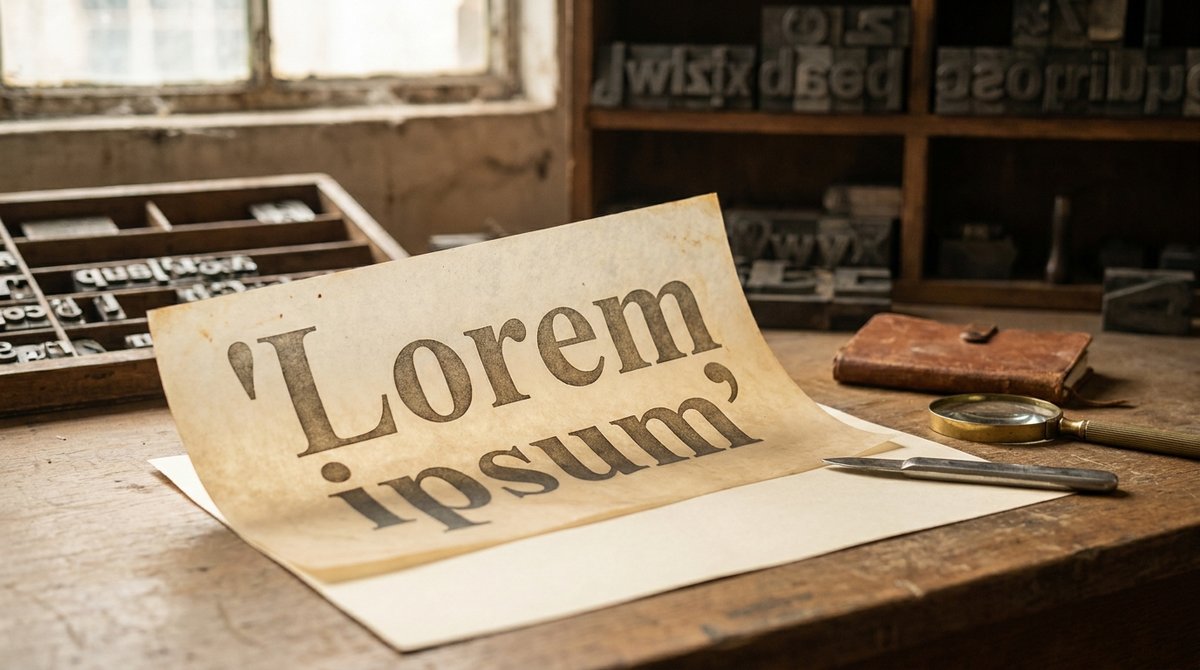
You've seen it a thousand times. Lorem ipsum dolor sit amet, consectetur adipiscing elit. It's on every draft website, every design mockup, every brochure template. I went down a rabbit hole on it recently and found something I can't stop thinking about.
Nobody knows who wrote it.
It really is Latin. Sort of.
In the 1980s a Latin professor named Richard McClintock got curious about the strange words designers had been shuffling around for decades, and traced them to their source: Cicero. A philosophy text called De Finibus Bonorum et Malorum, written in 45 BCE, about the nature of pain and pleasure. The "lorem ipsum" itself is "dolorem ipsum", pain itself, with the front chopped off mid-word.
So the filler text on your builder mate's draft website is a 2,000 year old Roman meditation on suffering. Which feels about right for anyone who's been through a website project.
But here's the genuinely clever bit.
Lorem ipsum isn't just degraded Latin. Someone engineered it. Words were removed specifically to kill the meaning. Fake endings were glued onto real words. Letters like y and z, which barely exist in Latin, were inserted so the letter distribution would mimic English. The whole thing was built to do two jobs at once: look enough like real text that a page layout behaves properly, and mean so little that your eye slides straight off it.
It was designed to be ignored. Deliberately, by someone who knew exactly what they were doing.
The story that it's been used by printers since the 1500s turns out to be a myth. The real spread came from Letraset, the dry-transfer lettering sheets of the 1960s, and then a creative director named Laura Perry put it into Aldus PageMaker in 1987, and from there it spread into practically every design tool since.
And the mystery: nobody knows who at Letraset actually did the scrambling. The most published text in human history, and it's anonymous. There's a terrific 27 minute video that plays the whole thing as a detective story, worth your lunch break: https://youtu.be/kL1PDqzqhM4
Why I'm telling you this
Because designed-to-be-ignored has a cost.
Placeholder text leaks onto live websites all the time. Real businesses, real visitors, and a dummy heading or a fake date left over from the build, sitting there in production with nobody noticing. The lorem ipsum story explains exactly why. The same property that makes placeholder content useful in a mockup, that your eye slides off it, is precisely what makes it leak. Nobody catches it because it was built not to be caught. The camouflage doesn't switch off at launch.
Three habits that stop the leak
1. Before anything goes live, search the whole site for the usual suspects: lorem, ipsum, dummy, TBC, placeholder phone numbers, example@ email addresses. Two minutes, catches most of it.
2. Get real content in as early as you can bear. Layouts lie when they're full of fake text. That perfect-looking design might fall apart the day your actual headline is twice as long.
3. Make it a checklist item, not a memory item. Humans miss this stuff precisely because it's invisible; that's the whole design. A checklist doesn't get bored, and it doesn't trust its own eyes.
Next time you spot lorem ipsum in the wild, and you will, it turns up on live menus, posters, even the odd billboard, you'll know what you're looking at: a Roman philosopher, scrambled by an unknown hand at a London type factory sixty years ago, hiding in plain sight on a million screens.
If you've ever caught dummy text on a live site, yours or anyone else's, hit reply. I collect these now.
Cheers,
Jez