The AI Tax
After Apps That Forgot, David Maunder wrote in with a single sharp question.
"Why is it that all of these huge corporate company mobs have the exact same dreadful web page layout. Huge, long scrolling, front pages with lots and lots of utter useless information in large bold text. I quickly jumped on to each of those that you listed below — and they all look and feel exactly like every other large corporate page out there these days. Why do they all think that a single long scrolly page is good?"
I started by thinking the answer was about design. I went and looked at the sites David visited, and the design answer turned out to be a different pattern that caught my attention. The sites do feel the same. The reason they feel the same is that every one of those companies is reaching for the same thing. Each one wants to be your whole business information system. They're starting from different corners. Notion from docs, Slack from chat, HubSpot from CRM (customer relationship management), Mailchimp from email. But they're all heading for the same destination. AI is the mechanism they're using to make the run. The renewal price is what they're charging you for the ride.
The everything race
Most of these companies have a name for what they're becoming. Notion calls itself the connected workspace. HubSpot calls itself the customer platform. Atlassian's Rovo says it's "AI that knows your business." ClickUp just says it plainly on the homepage: "Software to replace all software." Different words. Same destination. They want all your data, all your team's workflow, and the AI agents that act on both. The AI Tax is what they're charging to get there.
The AI Tax
There's a name for what's happening. Industry analysts call it the AI Tax. A 20 to 37 percent price uplift at renewal, justified by AI features that get bundled into your existing subscription whether you wanted them or not. SaaStr reported 1,800 SaaS (Software as a Service) pricing changes across 2025, most of them upward.
The shape is consistent. A year ago, your tool charged you fifty dollars per user. AI was an optional five-to-ten dollar add-on. You could take it or skip it. This year the cheap add-on is gone, AI is bundled into a higher plan, and the base price has crept up alongside. Notion, Slack, and Loom all walked customers through this exact move in 2025. Notion specifically killed its ten-dollar AI add-on in May 2025, then made full AI access require the Business plan at twenty dollars per user per month. A 100 percent uplift for the customers who'd been paying the cheap add-on.
Salesforce's top CRM tier now sits at five hundred dollars per seat per month, roughly double where it was five years ago. Most of the increase, the company will tell you, is AI.
Every software vendor is making the same bet at the same time. The websites converge because the pitch is the same.
Agent washing
Gartner has a term for what most SaaS companies are doing. They call it agent washing. The exact words from their June 2025 report:
"the rebranding of existing products, such as AI assistants, robotic process automation, and chatbots, without substantial agentic capabilities."
Someone showed me their new chatbot and it was a sequenced form dressed in the shape of a chat window. The bot's bubbles looked like a conversation. Underneath, it was a multi-step form. Type your name into the field. Click next. Type your email. Pick one of three options. The bot replies. End of script. No way to actually ask a question. No agent. No conversation. Just a form with a different skin. That's the shape Gartner is naming. You'll start seeing it everywhere once you know what to look for.
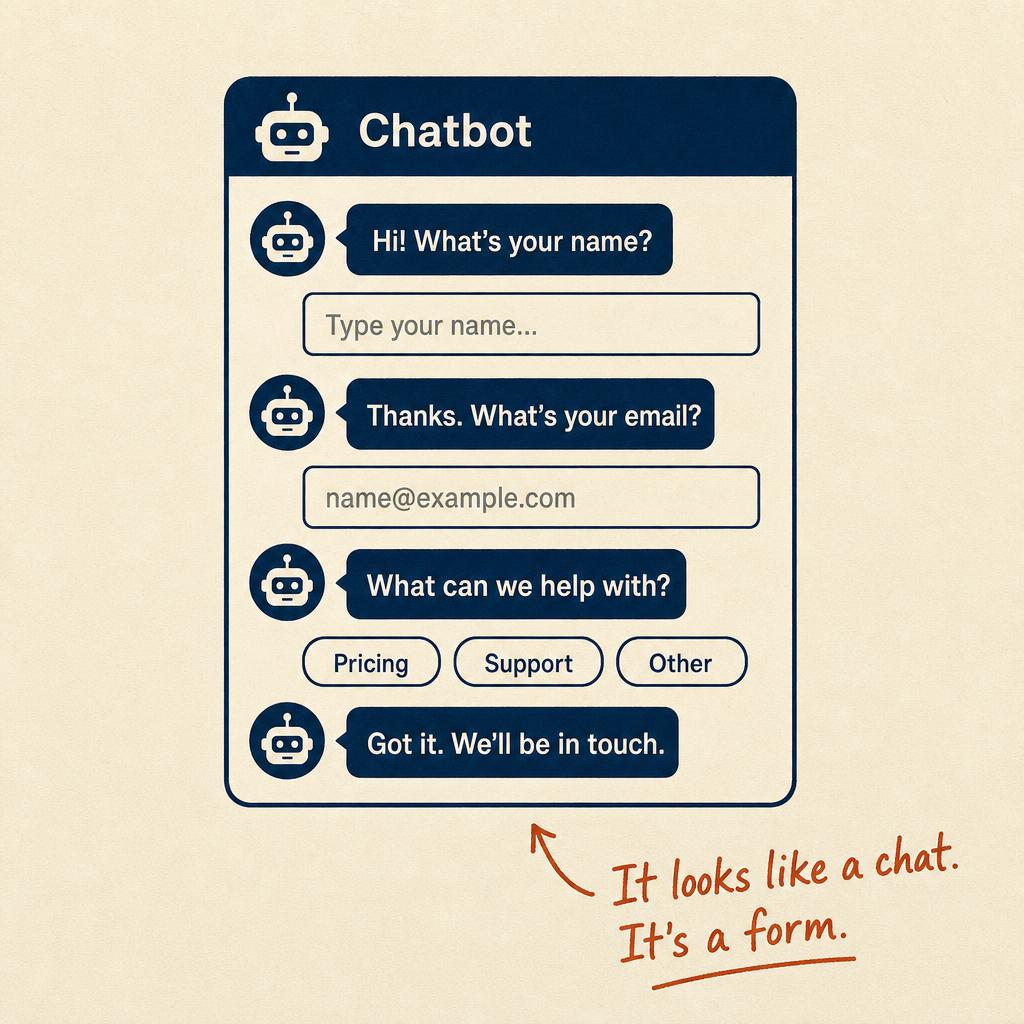
Gartner estimates that of the thousands of companies marketing themselves as agentic AI vendors, only about a hundred and thirty are real. They predict 40 percent of agentic AI projects will be cancelled by the end of 2027 due to escalating costs and unclear business value.
Gartner is not your local AI sceptic. They are the consultancy enterprise IT departments quote at each other in budget meetings. When they coin a phrase like agent washing, it sticks. Worth remembering at your next renewal call.
Two questions to ask
If you're staring at a renewal email or a new tier upsell, here are two questions that cut the picture cleanly.
One. If you stop paying, what do you actually lose?
For tools that have built useful AI features into your workflow, the loss is real. Cross-app automation that's been running. Customer service queries getting resolved while you sleep. A code-review agent that knows your codebase.
For tools where AI has been bolted on for the renewal cycle, the loss is small. Auto-suggested send times. AI-rewritten templates. A chat box that summarises emails you already read.
If the answer is "not much," you're paying the AI Tax for nothing.
Two. Did this exist as a feature before they called it an agent?
A lot of what gets sold today as AI agents was sold last year as automation, auto-suggest, smart templates, or workflow rules. Same feature, new wrapper, higher price tier. That's agent washing in plain sight.
If the AI is genuinely new behaviour, something the tool couldn't do before generative models existed, it might be worth the new price. If it's a relabelling exercise, it isn't.
My Google Workspace bill
I'm paying Google more for Workspace in 2026 than I did in 2025, and most of the increase is AI. Gemini features bundled into every user's plan whether they want them or not.
Google tried selling Gemini separately first. There was an add-on tier, and from what I could see, not enough people bought it to justify the bet. So Google bundled it. Now every user on our team has Gemini built into their Workspace subscription. The price went up to match.
They didn't kill the upsell, they buried it in the tier structure. Pay for a higher Workspace plan and you get more Gemini features. The pricing ladder is still there, just renamed.
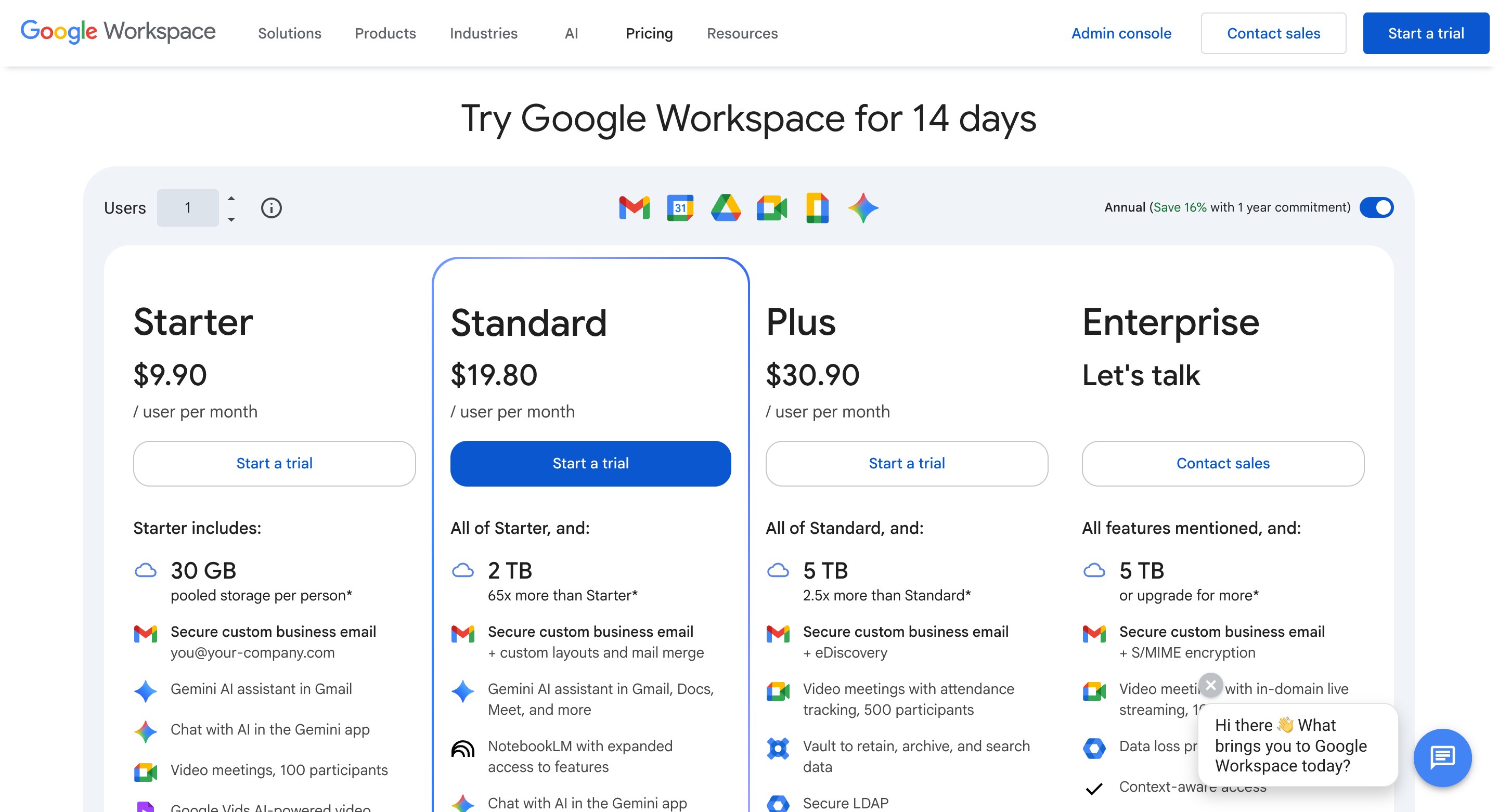
Here's where my own story diverges from the cleaner Notion example. My deep AI work happens in Claude, which I pay for separately. I don't open Gemini chat much. But I'm using Gemini more than I realise. The AI summaries above Google Search results. The smart-compose suggestions in Gmail. The meeting notes in Calendar. Docs offering to rewrite a paragraph. Transcribing the Google Meet calls our team has, and finding things in Chat I knew were said somewhere. None of those are me asking Gemini anything. They're me using Google the way I have for years, and Gemini being woven into the surfaces.
That's a different bet than the standalone-chatbot one. Spark, which Google announced at I/O 2026, is the next layer of it. A personal AI agent designed to run across Gmail, Calendar, Docs and the rest, taking action on your behalf. Spark is in preview for business customers, broader rollout through 2026. I'd be surprised if by the end of 2026 I'm not using Gemini noticeably more than I am now.
So Google's AI Tax is real, but the value question is less clean than I thought when I started writing this. The bundling makes sense for Google's bet. Whether it's good value for me depends on how much of the woven AI I actually rely on by year's end.
What to do at your next renewal
Not everything is theatre. Some SaaS AI features are doing real work, particularly in customer service where the agent has been given the knowledge and capabilities to handle real queries, and in cross-app workflows where the agent's whole job is traversing your stack. The point of this one is the bill.
Open the renewal email and read the line items. If there's a new AI feature included, ask yourself the two questions: would you pay for it as a standalone, and did it exist as something else before? If it's window dressing, push back on the price increase. Most vendors will negotiate when asked.
The AI Tax is real and the bill is in your inbox. Most of what you're paying extra for is theatre, but the theatre is optional. The agents that actually do work for you are still worth what they cost. The ones that don't, aren't.
Recently built
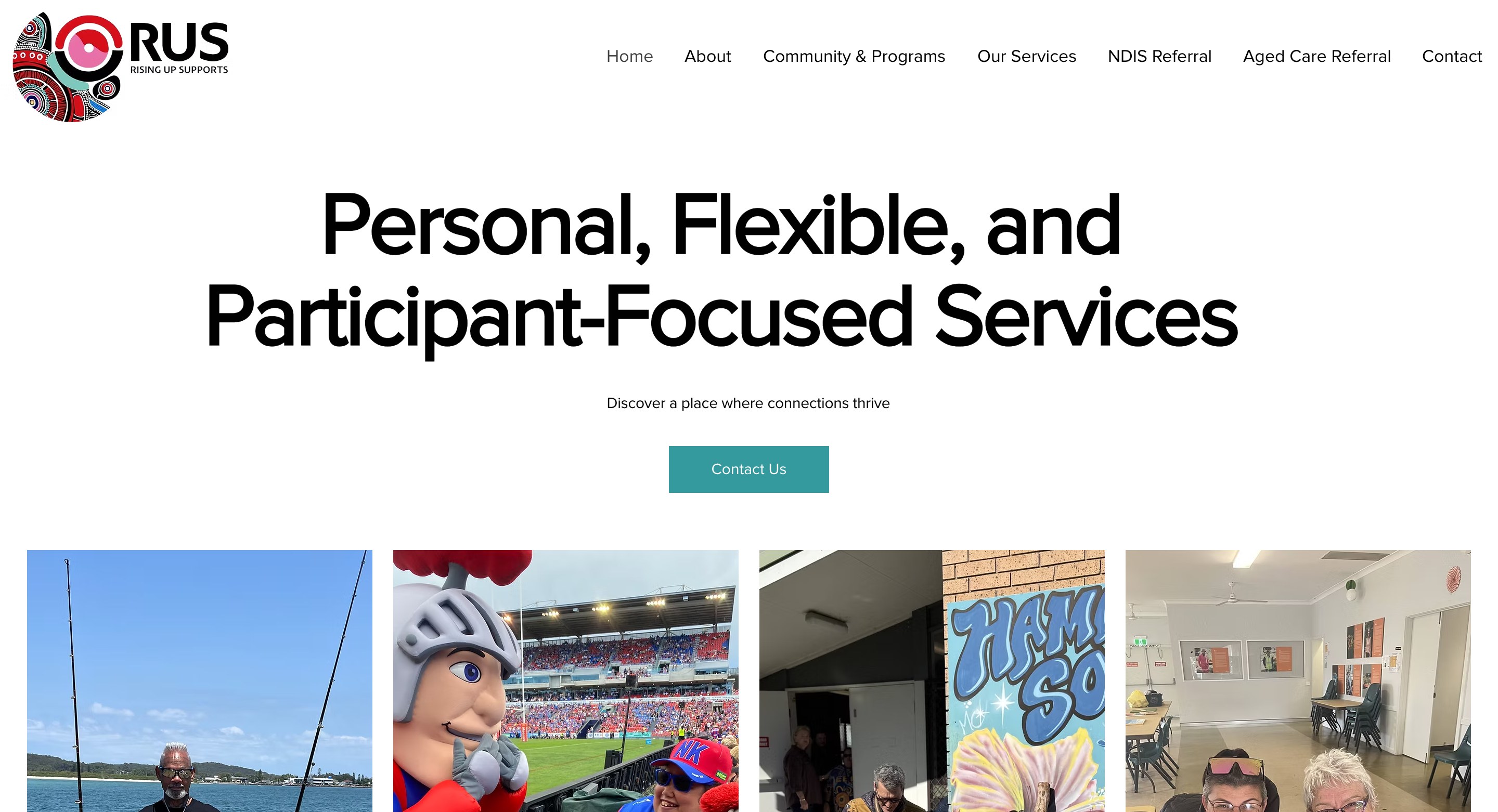
Rising Up Supports is an NDIS (National Disability Insurance Scheme) disability and aged care provider in regional NSW, started by three women, Gaylene, Stacey and Belinda, in May last year. They run personal care, social supports, peer mentoring and weekly community gatherings across Lake Macquarie, Newcastle, Maitland and Raymond Terrace, including cultural mentoring camps for young people during school holidays. We built them a site that puts the actual people and the actual programs at the front. Photos of Thursday gatherings at Hamilton South Community Hall, the karaoke, the didgeridoo sessions, the staff. None of it looks like the SaaS template I've been writing about for three editions.
Away from the keyboard

After three editions about agent washing, I thought I'd do some literal washing. It's rained in Newcastle for over a week, the basket was overflowing. Bored Panda. 🐼
Stay for a laugh
Seven minutes worth watching. "VibeOS - Fully Hallucinated Operating System," from Microsoft Build 2026. It does what it says on the tin.