The Ecosystem Trap

The Mac email hit a nerve.
I got more replies than anything I've sent in a while, and the conversation quickly moved past Mac vs PC into something bigger: the ecosystem trap. The feeling that no matter which direction you go, someone's got you locked in.
David Maunder, who's been in IT for 17 years at Liverpool Plains Shire Council, put it bluntly: he has "a very high dislike to where Microsoft has ended up." He's watching the tools get worse while the prices go up. A lot of people are.
Tim Willis from The Image Factory went further and wrote something I've been thinking about ever since. His take was that Google, Microsoft, and Apple all started life as genuinely excellent products. Google was search. Microsoft was the OS and server tools. Apple was hardware. Then they each got greedy trying to take their competitors' market share, and the result is a weaker offering from all of them. As Tim put it: "I just wish each would concentrate on what they are good at, not trying to be everything to everyone."
He's right. I wrote in the Mac email that the Microsoft moat is drying up. But Tim's point is broader than that. It's not just Microsoft. It's the whole model of one company trying to be your operating system, your email, your documents, your cloud storage, your video calls, your AI, and your identity provider all at once. Nobody does all of those things well. They just make it painful to leave.
Is the lock-in actually ending?
Something is moving, and faster than I expected.
The EU had a bad scare this year. Between trade tensions with the US, the real possibility of American tech services being used as leverage, and the general unpredictability coming out of Washington, European governments went from talking about "digital sovereignty" to actually spending money on it. All 27 EU member states signed a declaration committing to strengthen their digital sovereignty. That's not a press release. That's a direction.
France is moving 2.5 million public servants off Teams, Zoom, and the rest onto locally built alternatives. Germany's Schleswig-Holstein region has already moved about 80% of its government workplaces onto open-source alternatives like LibreOffice. Estonia's digital affairs minister called it "a matter of national survival, not just IT policy."
Nextcloud's moment
If you haven't heard of Nextcloud, it's an open-source platform for file storage, document editing, video calls, calendar, contacts, email. Basically everything Google Workspace or Microsoft 365 does, but you host it yourself or with a provider you trust. Your data stays where you put it.
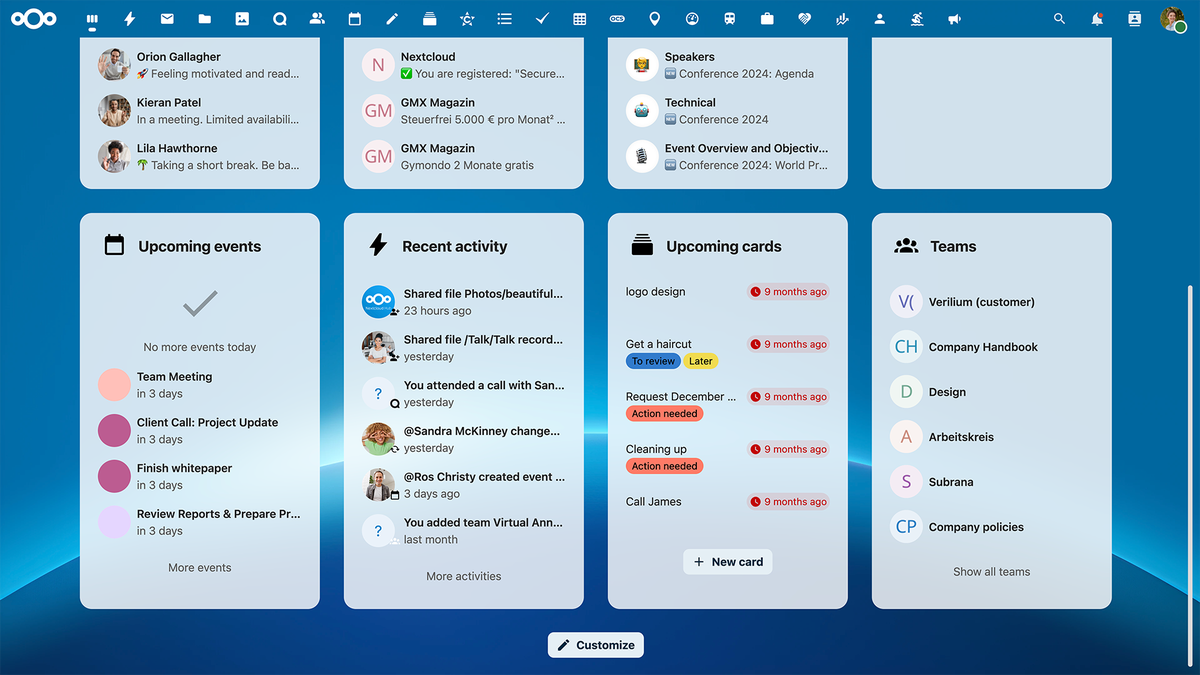
I installed Nextcloud a couple of years ago when I was looking at Google Workspace alternatives. At the time, the feature gap made it hard to justify the switch. Google was just too far ahead on the things that mattered day to day. But Google Workspace keeps getting more expensive.
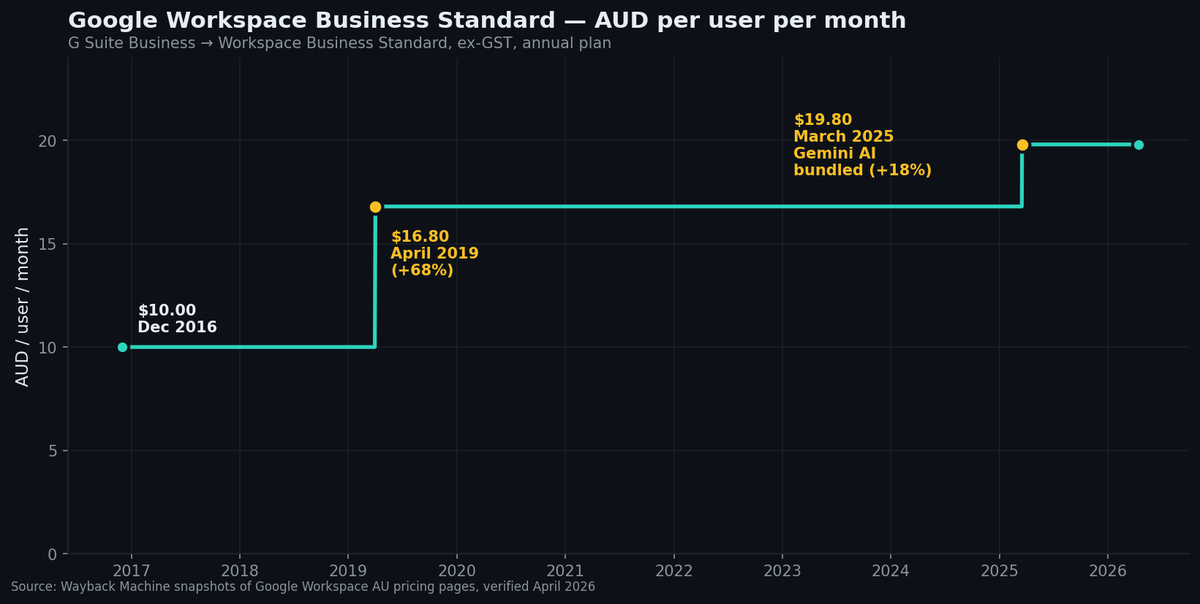
When I first set one up for a client back when it was still called G Suite, the Business tier was $10 a month. Today's Business Standard is $19.80 (AUD, ex-GST), with Gemini AI bundled in whether you want it or not. It's almost doubled in a decade, mostly in two jumps: a 68% hit in April 2019, and an 18% one last year. For a company managing dozens of seats, those jumps add up fast. The gap has been closing.
Nextcloud has been growing steadily since 2016, and they've done it without venture capital. Profitable, employee-owned, headquartered in Germany, growing over 50% in bookings year on year. Customer interest tripled over the course of 2025.
A few weeks ago they launched an open-source office suite called Euro-Office, specifically built for Microsoft format compatibility. Documents, spreadsheets, presentations. The whole point is that European organisations can stop depending on US platforms without losing the ability to open a .docx file. It's backed by a consortium including Nextcloud, IONOS, Proton, and several others.
It's early days and the project has some teething issues to work through. But the direction is clear: there's serious money and serious political will behind building alternatives that didn't exist two years ago.
Why this matters even if you're not in Europe
You might be reading this thinking "I'm in Newcastle, not Brussels. Why do I care?"
Two reasons.
First, when governments with deep pockets fund open-source alternatives, everyone benefits. Nextcloud doesn't just work in Germany. It works anywhere. If the EU pours hundreds of millions into making these tools better, the rest of us get access to better software for free or close to it.
Second, and this is the bit I find most exciting: AI is changing how fast small teams can build software. A company like Nextcloud with 100 people can now ship features at the pace that used to require 500. The gap between the open-source alternatives and Microsoft's offering is closing faster than anyone expected. Not because Microsoft is getting worse (though the subscription creep isn't helping), but because the other side is getting better, faster.
The real escape hatch
I don't think the answer to ecosystem lock-in is going to be a single product that replaces everything. It's going to be a combination of better open-source tools, better interoperability standards, and AI that handles the busywork regardless of what platform you're on.
The documents, the emails, the calendar juggling, the formatting nightmares when someone sends you a file from a different ecosystem. That's the stuff AI is going to make irrelevant. Not by replacing the tools, but by making it matter less which tool you use.
I mentioned in the Mac email that I don't open Word to make a Word document anymore. Claude makes it for me. That's a small example of a much bigger shift. When AI sits between you and your tools, the lock-in loses its grip. You stop caring whether your spreadsheet is in Google Sheets or Excel or LibreOffice, because you're not the one wrestling with the interface anymore.
We're not there yet. But for the first time in a long time, it feels like we're heading somewhere better.
-- Jez
Recently built
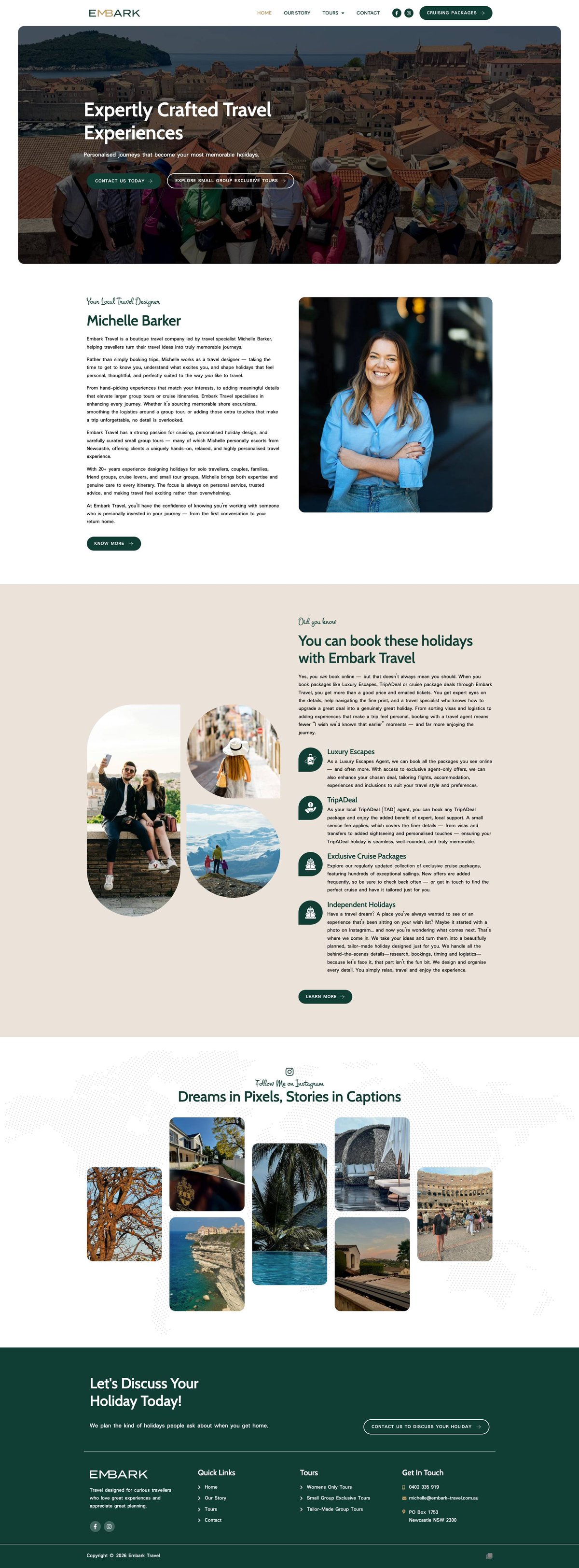
Embark Travel is a boutique travel agency designing personalised holidays, small group tours, and cruise experiences. The brief was a site that feels as considered as the trips they plan. Warm imagery, clear itineraries, easy enquiry flow. The kind of site that makes you want to book something.
If someone you know would get something out of this, feel free to forward it. And just reply if you want to chat — I read every one.