You Used to Own Your Software

Do you remember buying software in a box?
One price. Yours forever. You put the disc in, installed it, and it sat on your computer until the hardware died. Microsoft Office 97, Photoshop 6, QuickBooks 2003. Whatever version you bought was the version you used, possibly for a decade.
That model is almost entirely gone now.
Windows nudges you toward a Microsoft account. Office is a monthly subscription. Adobe moved Creative Cloud to subscription-only in 2013, everyone complained loudly, and then most people just... accepted it. Not because they were happy about it. Because what were they going to do?
How the maths changed for software companies
The shift makes sense if you look at it from a business perspective. A perpetual licence is a one-time transaction. A subscription is a relationship, and relationships compound.
Once you're paying monthly, you face a different decision when the price goes up: pay more, or lose access to everything you've built inside the tool. Your files, your history, your workflows. That's not a feature. That's leverage.
The software industry didn't invent this, but it perfected it.
The other side of it
I run a subscription business. Jezweb charges monthly for hosting, maintenance, and support. And I pay subscriptions on the other end too. Google Workspace, Cloudflare, SMTP2Go, domain registrars, monitoring tools, SEO tools, email delivery, hosting providers, AI platforms, WordPress plugins, SSL certificates. The list is genuinely enormous. We've been chipping away at it by building our own tools and plugins, but then we're paying more than ever to Anthropic for the AI that builds them. The total bill hasn't gone down. It's just shifted.
The cloud genuinely solved real problems.
A 10-person business in 2005 needed a physical server, hosted Exchange, and someone to maintain all of it. Thousands of dollars upfront, ongoing IT costs, and a single point of failure sitting in a cupboard somewhere. Most small businesses I know are better off now than they were then.
Shifting from purchase to rental was the right call for most SMEs. Predictable monthly costs instead of lumpy hardware purchases every four years. Google Workspace at $7 a month was a genuinely better deal than running your own email server in almost every scenario. I'm not going to pretend the subscription model is inherently bad, because it isn't.
The problem is something more specific.
The problem is when subscriptions become traps
There's a line between "I'm paying for a service" and "I'm paying because I can't leave."
Google Workspace Business Standard was around $10 AUD per user per month in 2016. It's $19.80 now. Nearly doubled over nine years, mostly in a couple of sharp jumps. The product got better in some ways, yes. But not twice as good. And for most of the businesses I know using it, the new features that justified the increases were things nobody particularly asked for.
That's the pattern. Not gradual, value-driven improvement. Periodic increases with just enough new packaging to make them feel justified.
Mailchimp is a cleaner example. I built Jezmail, the newsletter system I use to send this email, partly because Mailchimp kept raising its prices. At a certain point the cost stopped being proportional to what I was getting. I'm now sending to around 2,500 people for basically the cost of email delivery. The savings are real.
The frustration isn't paying for software. It's paying more every year for something that's gradually more annoying to leave, not because it's getting better, but because switching costs are the product.
The thing that might change this
Open-source tools have been getting quietly better for years. Not always more polished. Not always easier. But more capable.
AI tools are starting to close the gap on the switching cost problem. A small team can now build internal tools, automate workflows, and replace expensive SaaS products in ways that weren't realistic three years ago. The subscription model works largely because building your own alternative was too hard. That assumption is softening.
I don't think most businesses should go build their own email platform. I did it partly because it's my industry and partly because I wanted to understand the stack. For most people, that's not the right call.
But the question is worth asking: which of the things you're paying for have become traps, not services?
A useful test
Ask yourself two questions about each subscription you pay for.
One: if the price doubled tomorrow, could you practically leave? Not could you theoretically leave. Could you actually move your data, retrain your team, and find an equivalent in a reasonable timeframe?
Two: in the last 12 months, has the product improved in ways that matter to you, or has it improved in ways the marketing team wanted to announce?
If the answer to both questions makes you uncomfortable, you're probably in a trap, not a service.
That's not inherently the software company's fault. But it is useful to see it clearly.
-- Jez
Recently built
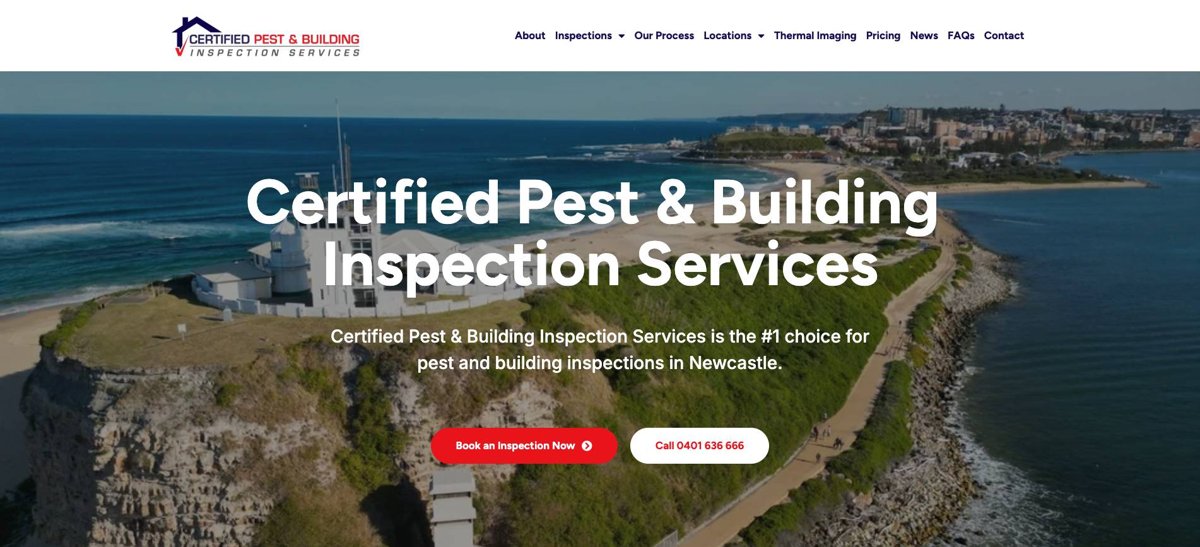
Certified Pest & Building Inspection Services. Pre-purchase pest and building inspections across Newcastle and Lake Macquarie, starting from $395. The site lays out their inspection packages clearly so buyers can book with confidence before settlement.
If someone you know would get something out of this, feel free to forward it. And just reply if you want to chat, I read every one.